Nervous System Foundations
Before you can regulate your nervous system, you need to understand it. This module lays the groundwork for everything that follows.
Your Nervous System Runs the Show
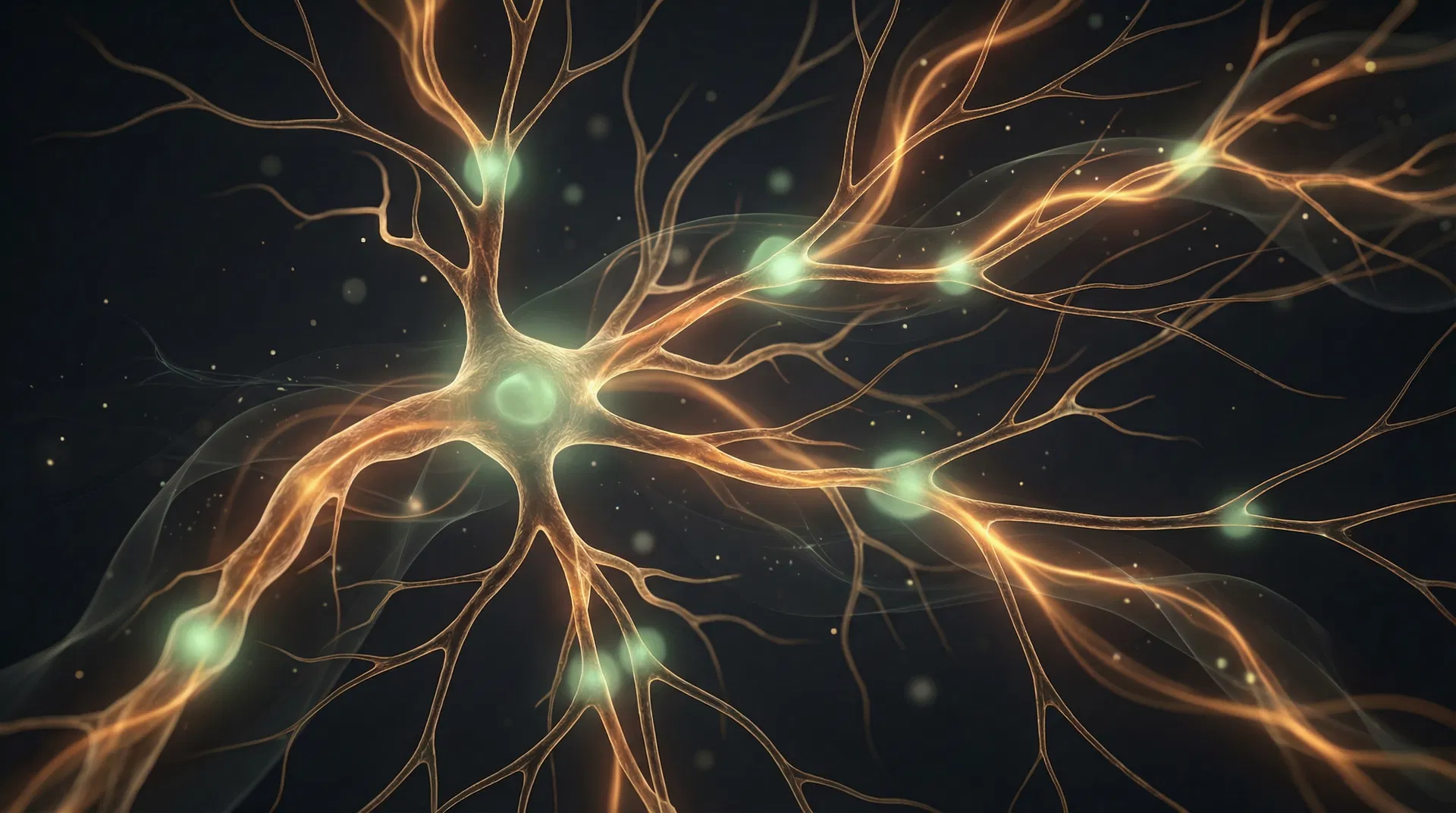
Your nervous system is the master control system of your entire body. It governs every thought you think, every emotion you feel, every decision you make, and every physical sensation you experience. It determines whether you feel safe or threatened, calm or anxious, connected or isolated. It operates largely beneath your conscious awareness, processing millions of signals per second to keep you alive and functioning.
For high performers, understanding the nervous system is not optional — it is essential. The reason you can close a multi-million dollar deal one day and snap at your partner over something trivial the next has nothing to do with willpower or character. It has everything to do with the state of your nervous system. When your system is regulated, you have access to your highest cognitive functions: creativity, empathy, strategic thinking, and calm decision-making. When it is dysregulated, you are operating from survival — and survival does not care about your quarterly goals.
The Structure of the Nervous System
The nervous system is divided into two major branches, each with distinct but interconnected roles.
Central Nervous System (CNS)
Peripheral Nervous System (PNS)
The Part That Matters Most for Regulation
The autonomic nervous system (ANS) is where the real work of regulation happens. It operates without your conscious control and has three primary branches.
The Sympathetic Nervous System — Your Accelerator
Often called the "fight or flight" system, the sympathetic branch activates when your body perceives a threat. It increases heart rate, dilates pupils, redirects blood flow to muscles, releases adrenaline and cortisol, and prepares you for action. In the modern world, this system activates not just for physical threats but for emails, deadlines, difficult conversations, and financial pressure. When it is chronically activated, you live in a state of perpetual urgency — even when there is no actual danger.
The Parasympathetic Nervous System — Your Brake
The parasympathetic branch is your "rest and digest" system. It slows the heart rate, promotes digestion, supports immune function, and facilitates recovery and repair. The primary nerve of this system is the vagus nerve — the longest cranial nerve in the body, running from the brainstem through the face, throat, heart, lungs, and gut. A well-toned vagus nerve is one of the strongest predictors of emotional resilience and the ability to recover from stress.
The Enteric Nervous System — Your Second Brain
Often overlooked, the enteric nervous system contains over 100 million neurons lining your gastrointestinal tract. It communicates bidirectionally with the brain via the vagus nerve — this is the gut-brain axis. This is why stress causes stomach problems, why anxiety creates nausea, and why "gut feelings" are real physiological events, not just metaphors.
The Nerve That Changes Everything
If there is one structure in your body that you should understand deeply, it is the vagus nerve.
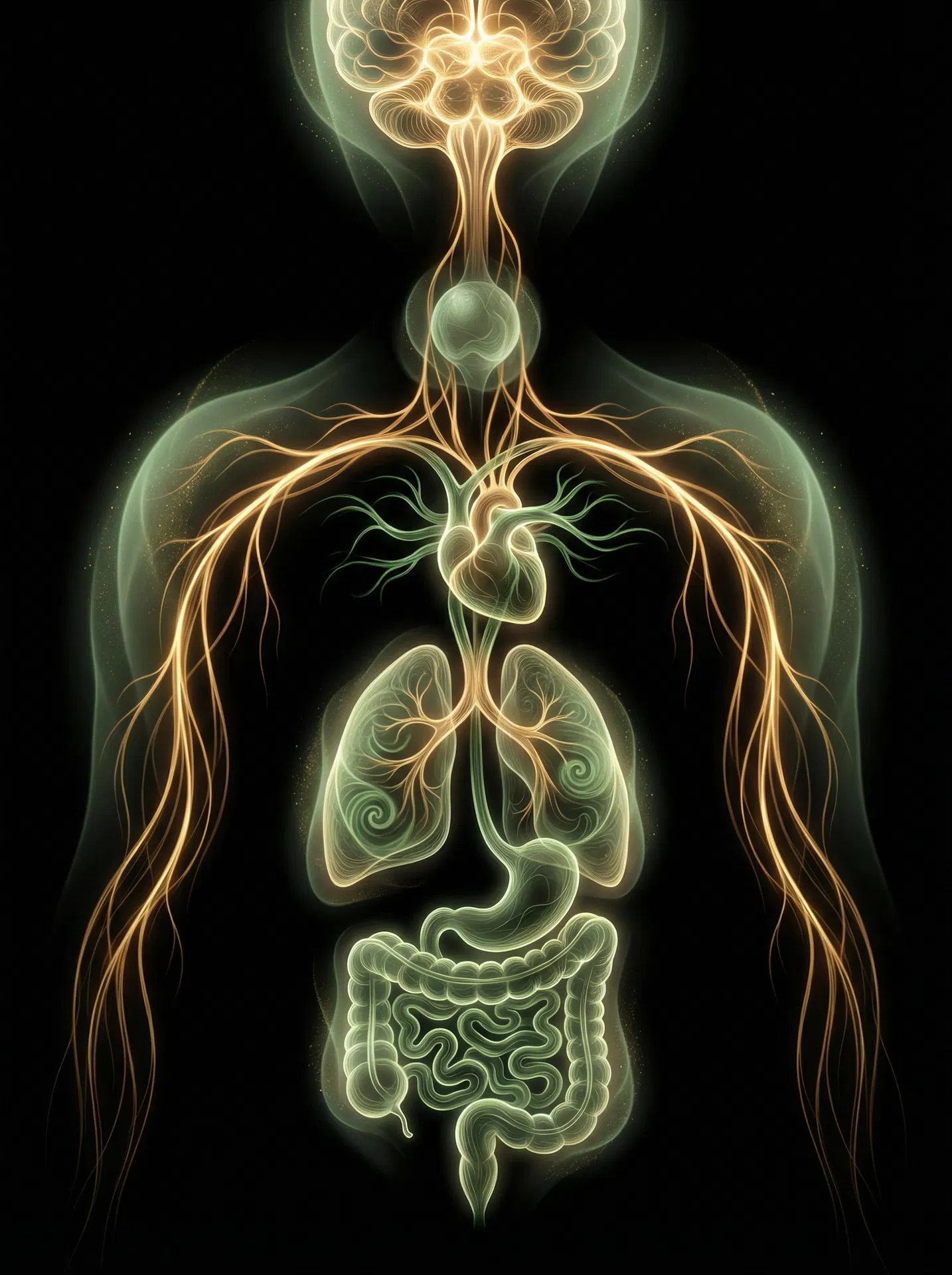
The vagus nerve (cranial nerve X) is the primary nerve of the parasympathetic nervous system and the single most important structure for nervous system regulation. The word "vagus" comes from the Latin for "wandering," and it lives up to its name — it is the longest cranial nerve in the body, branching from the brainstem down through the neck, throat, heart, lungs, diaphragm, stomach, and intestines.
The vagus nerve carries approximately 80% of its signals from the body to the brain (afferent signals), not the other way around. This means your body is constantly informing your brain about its state. When the vagus nerve detects safety — through slow breathing, warm social connection, gentle movement — it signals the brain to downregulate the stress response. When it detects threat — through rapid breathing, muscle tension, isolation — it signals the brain to activate survival mode.
Understanding the vagus nerve is foundational because it explains why top-down approaches alone (thinking your way to calm, using willpower, positive affirmations) often fail. If the vagus nerve is sending danger signals to the brain, no amount of cognitive reframing will override that biological alarm. This is why The Peace Protocol begins with regulation — stabilizing the body first — before addressing thoughts, identity, or behavior.
Foundational Terms You Need to Know
Neuroception
Vagal Tone
Heart Rate Variability (HRV)
Autonomic State
Co-regulation
Window of Tolerance
Module 1 Key Takeaways
Your nervous system is the master control system of your body — it determines your thoughts, emotions, decisions, and physical state.
The autonomic nervous system (ANS) operates beneath conscious awareness and has three branches: sympathetic (accelerator), parasympathetic (brake), and enteric (gut brain).
The vagus nerve is the primary nerve of the parasympathetic system and the most important structure for regulation.
80% of vagal signals travel from body to brain — your body informs your mind, not the other way around.
Vagal tone can be measured and strengthened through specific practices.
You cannot think your way out of a dysregulated nervous system — regulation must start in the body.
Go Deeper
This module is part of the knowledge foundation. When you are ready to move from understanding to guided implementation, The High Level Life Method provides the structure, support, and expertise to transform what you have learned into lasting change.
Learn more at The High Level Life